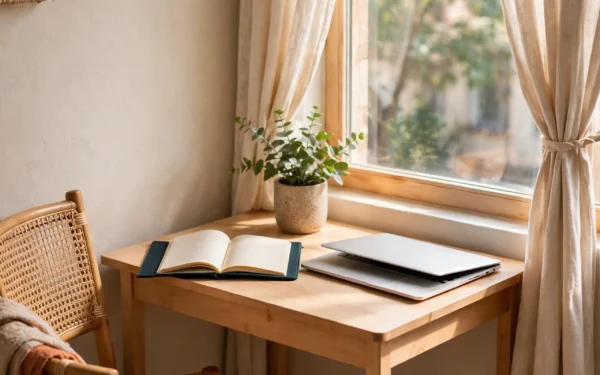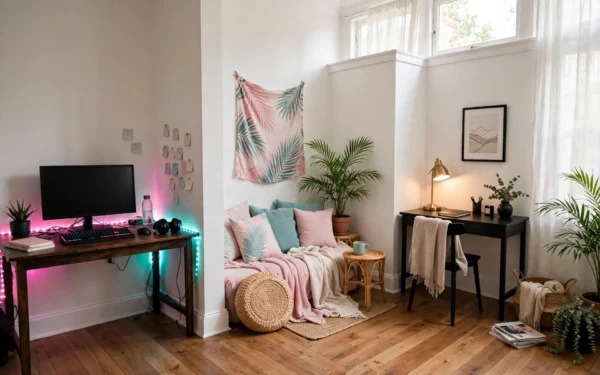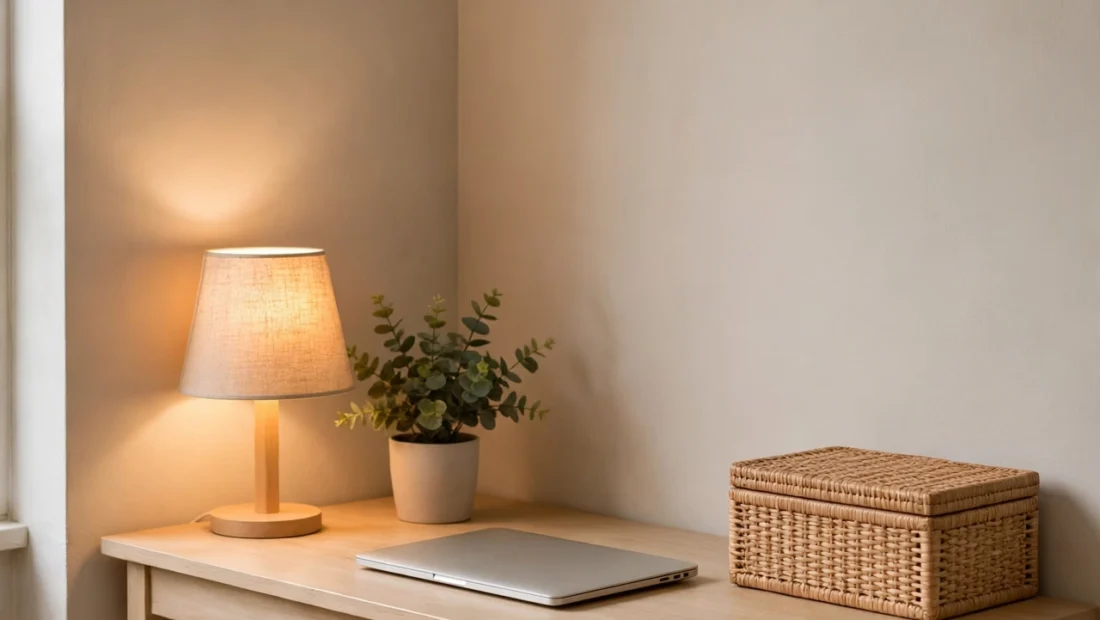
A minimalist home office is not an empty room. It is a small, calm workspace where everything you keep earns its place, and everything else stays out of sight. That matters most in a rental or a small apartment, where your desk often shares a room with your bed, your sofa, or your dining table. This guide shows how to design a minimalist office that still feels warm and personal, without drilling, without buying new furniture you do not need, and without turning your home into a showroom you are afraid to use.
Table of Contents
[Hide]- What minimalist office design really means:
- Choose the spot first, then the desk:
- Keep only what you use daily on the surface:
- Storage that hides, not displays:
- Light, sound, and comfort without clutter:
- Make it renter-friendly:
- A simple weekly reset:
- Colour and texture: warm, not sterile:
- A minimalist desk for video calls:
- Minimalism with a partner, family, or housemates:
- What to remove first: a 20-minute starter declutter:
- Minimalist office mistakes to avoid:
- Seasonal and evening use:
- FAQ:
What minimalist office design really means:
Minimalism here means fewer decisions, not fewer comforts. Start with three questions: what do you do at this desk every day, what do you reach for without thinking, and what has been sitting there for a month untouched? The first two groups stay within arm’s reach. The third group leaves the desk. A calm palette helps: one main neutral, one wood tone, and one accent you already own. That is enough to make a corner feel intentional, and it keeps a small space from looking busy on video calls too.
Choose the spot first, then the desk:
Light comes before furniture. A desk near a window gives you daylight and a natural break for your eyes, but avoid sitting with a bright window directly behind you on calls. Side light is usually the kindest option. If your only option is a bedroom corner or a living-room wall, use a rug, a lamp, or a low shelf to mark the edge of the work zone. You do not need a partition to tell your brain that work ends there.
Keep only what you use daily on the surface:
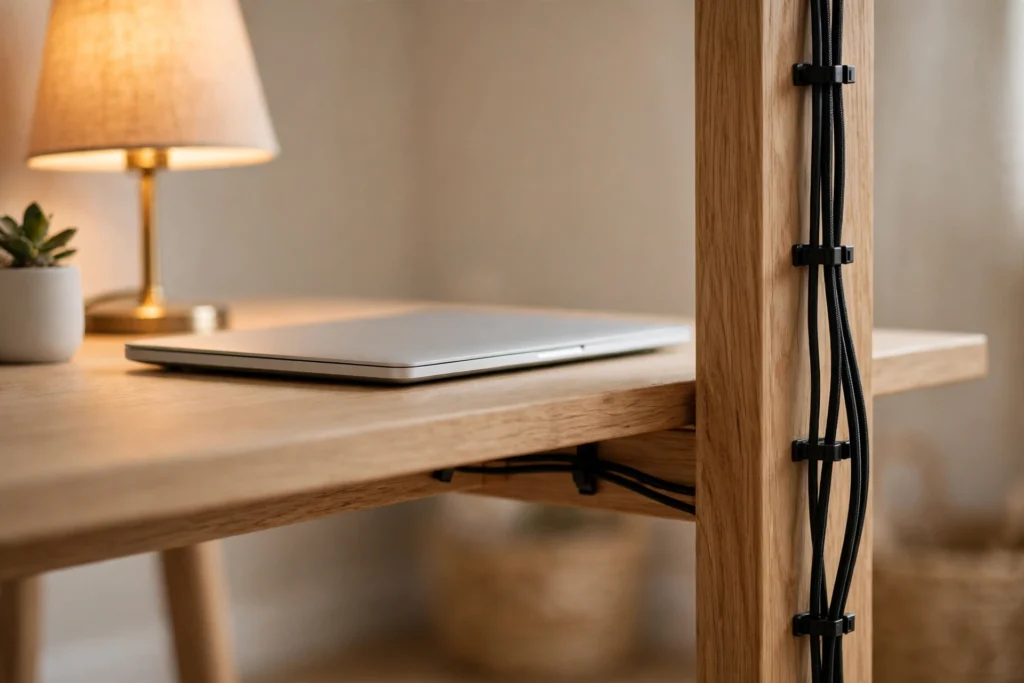
A laptop or monitor, a notebook, a pen, and water are a complete desk for most people. Add one tray or small box for chargers and cables, and move everything else to a drawer, a shelf, or a closed box nearby. Cables are the fastest way to ruin a minimalist look. A simple cable clip, a short cable, and a power strip tucked behind the desk leg will do more than any new organizer.
Storage that hides, not displays:
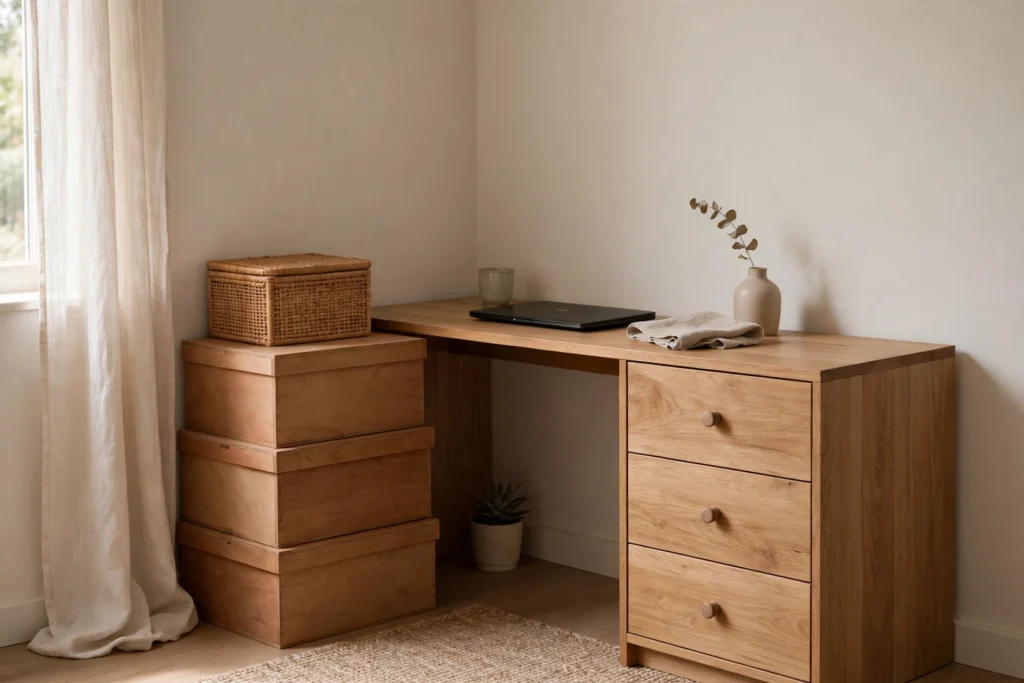
Open shelves look good in photos and collect dust and visual noise in real life. For a minimalist office, prefer one closed drawer, one closed box, or one cabinet door for papers and supplies. Keep one shelf, at most, for the few books or objects you genuinely enjoy seeing. Label boxes by use, not by contents alone: “daily”, “weekly”, and “archive” is easier to maintain than a long list of categories you will never update.
Light, sound, and comfort without clutter:
One warm desk lamp, one comfortable chair you already own, and a cushion or footrest if you need one are enough. If your chair is uncomfortable, fix that before you buy decor — no plant or poster makes a bad chair bearable for a full workday. For sound, a closed door helps more than headphones alone. If you share the space, agree on work hours with housemates where you can, and use a simple “in a call” signal, like headphones on, so you are not interrupted mid-meeting.
Make it renter-friendly:
Do not drill into walls for a minimalist look. Use leaning shelves, freestanding bookcases, adhesive hooks rated for light items where your lease allows them, and furniture you can move at move-out. Check your lease before mounting anything heavy, and keep the original fittings so you can restore the space. If you are unsure whether a fix is allowed, choose the removable version. A minimalist office that you have to repair at move-out was not a minimalist decision.
A simple weekly reset:
Minimalism fails quietly, one paper at a time. Take five minutes at the end of your last workday each week: clear the desk surface, return items to their box or drawer, and bin or file anything that arrived during the week. That small reset keeps the design working without a big declutter every few months.
Colour and texture: warm, not sterile:
A minimalist office often fails because it looks like a waiting room. Warmth comes from texture, not from more objects. A wood desk top, a woven basket, a linen cushion, and a plant give the eye something soft to rest on, while the overall palette stays quiet. If your walls are white, warm wood and warm light will do most of the work. If your walls are already warm, keep the desk and storage in a similar tone so the corner does not fight the room. Choose one accent colour and repeat it in small doses: a notebook, a mug, a cushion cover. Repeating one colour looks intentional. Five different accent colours, even in small items, look busy again.
A minimalist desk for video calls:
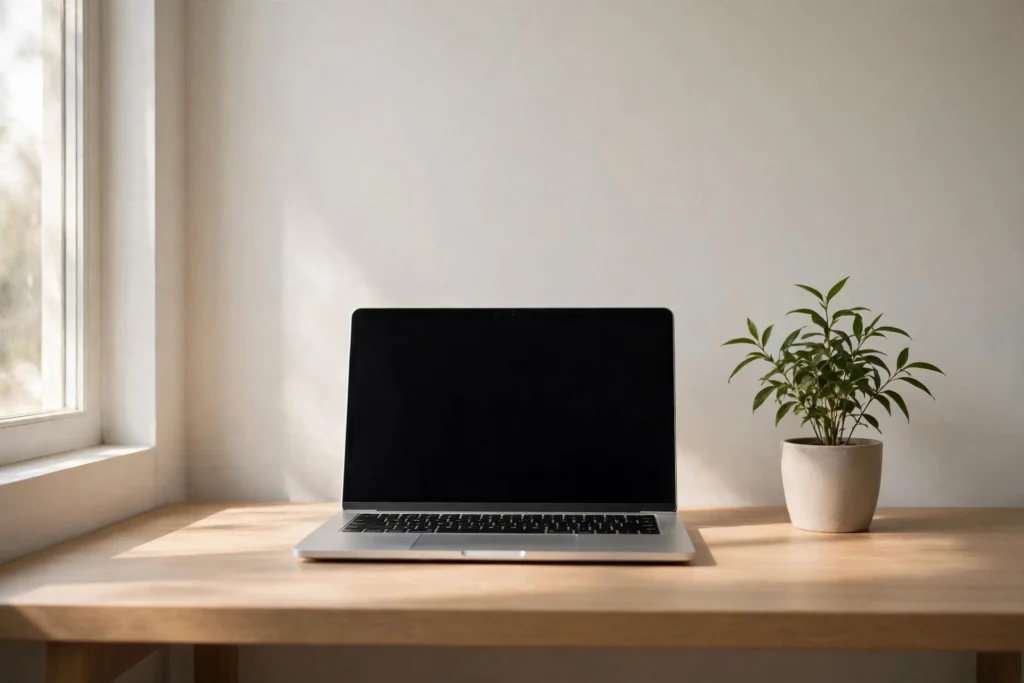
Most home offices are also video studios now. A plain, uncluttered background reads as professional, and it also means you do not have to tidy the whole room before every call. Put your desk so the camera sees a wall or a tidy shelf, not a bed or a kitchen counter. Side light on your face is kinder than overhead light or a window behind you, which turns you into a silhouette. Keep one thing behind you that looks personal, if you like — a plant or a framed print — and nothing that distracts. You do not need a perfect background, just a calm one you do not have to rebuild every day.
Minimalism with a partner, family, or housemates:
A shared home makes minimalism harder, because other people’s things drift into your work corner. Agree on a simple boundary: your desk surface and one box or drawer are yours, and everything else lives elsewhere. If you share a table, agree on a start-of-work and end-of-work tidy: each person clears their own items at the end of their workday, so the table is neutral again in the evening. For families, a small tray per person can work better than a shared pile. Children and partners are more likely to respect a clear, labelled spot than a vague request to “keep it tidy”.
What to remove first: a 20-minute starter declutter:
If the whole idea feels overwhelming, start with a timer, not a shopping list. First, remove everything from the desk surface except your computer, notebook, and lamp. Second, sort the pile into three groups: keep at the desk, store nearby, and remove from the room. Third, put the keep group back, the store group into one box or drawer, and the remove group into a bag by the door. Do not buy organizers until after this step. Most people discover they already have a box, tray, or drawer that works, and buying first usually adds more clutter, not less.
Minimalist office mistakes to avoid:
The most common mistake is making the space so bare that it is uncomfortable to use. A chair with no cushion, light that is too dim, and nowhere to put a glass of water will drive you to work from the sofa instead. Comfort is part of the design, not a compromise of it. Another mistake is hiding everything so well that you cannot find it. If you spend five minutes looking for a charger every day, that charger needs a visible, labelled home, not a deeper drawer. Minimalism should reduce friction, not create a treasure hunt. A third mistake is copying a photo exactly. Photos hide cables, printers, and paperwork. Your office needs to hold your real work, so design for your real tasks first, then make it look calm.
Seasonal and evening use:
A minimalist office should work in winter evenings as well as summer mornings. A warm lamp, a throw for your chair, and curtains or blinds that cut glare in the evening will make the corner usable all year. In summer, daylight and a plant may be enough. In winter, light becomes the main decor, so invest your attention there before adding anything else. If your desk is in a bedroom, an evening wind-down matters too: close the laptop, put papers in their box, and switch the desk lamp off. That small ritual tells your brain the workday is over, even when the desk is still in the room.
FAQ:
Does a minimalist office have to be all white? No. White can feel cold in a small room. Warm neutrals, light wood, and one soft colour you already like will feel calmer and more personal than a strict all-white scheme.
What if I have no spare room? Use a corner, a wall, or one end of a table, and mark it with light and a rug. A defined corner used daily beats a spare room you never sit in.
How do I keep a minimalist desk with a lot of paper work? Keep paper in one closed box or drawer, sorted into daily, weekly, and archive. Only today’s papers live on the desk.
Is minimalism expensive? It should be cheaper. The first step is removing and reusing what you already own, not buying a new set of matching organizers.