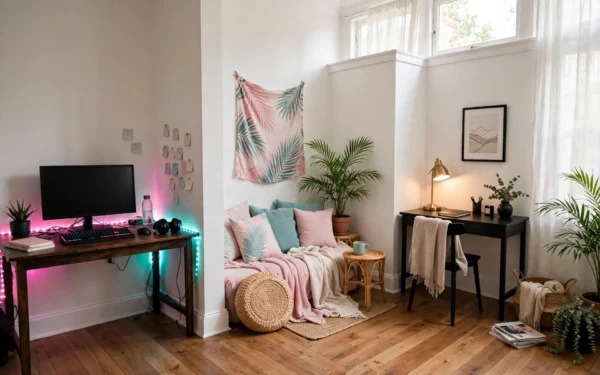
A poster wall is the fastest way to make a room feel like yours, and the easiest way to make it look like a dorm. The difference is not how many posters you own. It is whether the wall looks planned: a few prints, chosen on purpose, hung straight, at the right height, with nothing taped, pinned or curling at the corners.
GTA 6 gives the poster wall a theme that actually holds together — Vice City pink and teal, Leonida coastlines, one world with a strong look. This guide shows how to build that wall in a rental: choose three to five prints, lay them out for a small wall, hang them with methods ranked by hold, and frame the cheap prints so they look deliberate.
Table of Contents
[Hide]- Choose 3–5 prints, not 15
- A layout that works on a small wall
- Damage-free hanging, ranked by hold
- Framing cheap prints so they look deliberate
- FAQ
- How many posters should I put on a wall?
- How do I hang posters without damaging a rental wall?
- How far apart should poster frames be?
- How high should I hang a poster wall?
- How can I make cheap posters look expensive?
Choose 3–5 prints, not 15
A poster wall works when it feels like a collection, and a collection needs editing. Fifteen prints on one wall is not a gallery; it is a noticeboard. Three to five prints is the sweet spot for a small wall: enough to feel like a wall, few enough that each print gets seen.

Start with one anchor — the biggest, boldest print, usually the Leonida map or a key-art poster in pink and teal. Then add two to four supporting prints that share something with it: the same colour family, the same world, or the same mood. A Vice City skyline, a palm-tree print, a neon-style sign print — each one should answer the question “why this one?” If a print only fills a gap, leave it out.
One colour direction matters more than one subject. Pick pink and teal as the palette and let everything else stay calm — white walls, warm wood, a plain desk. A wall of fifteen prints in fifteen colours fights with the room; a wall of four prints in two colours feels designed. And leave room to grow: a wall that starts with three prints and gains one later always looks more considered than a wall that was filled in one shopping trip.
A layout that works on a small wall
Plan the wall on the floor before anything touches it. Lay the prints out, measure the wall, pick an anchor, and tape paper templates to the wall for a day before hanging. The template trick is the single best way to get a gallery wall right the first time — it shows you the real size, the real gaps, and whether the wall can actually hold the arrangement.
Three layouts work on a small wall. The row: three prints in one line above the desk, all the same size, gaps even. The grid: four prints in a two-by-two square, calm and graphic, best when the prints share a size and the frames match. The anchor-and-satellites: one large print in the middle, with two or three smaller prints around it. The vertical column — three or four frames stacked in a single line — suits a narrow wall beside a door, and makes a low room feel taller.


Whatever layout you choose, treat the whole group as one big picture. Keep the gaps even, around 5 to 8 cm between frames — tight enough to feel like one unit, loose enough that each piece can breathe. Size the group to about two-thirds of the width of the furniture below it, and leave 15 to 20 cm of wall on each side so the group does not crowd the corners or the door frame. Hang the centre of the whole group at about 145 to 150 cm from the floor — average eye level — or, above furniture, leave 20 to 30 cm between the furniture and the bottom of the lowest frame.
One more rule for small rooms: leave at least one wall mostly bare. Filling every wall makes a small room feel smaller. One good poster wall is a feature; four walls of posters is clutter.
Damage-free hanging, ranked by hold
Not all no-drill methods hold the same weight, and picking the wrong one is how renters lose deposits. Ranked from strongest to lightest, here is what actually works.
Strongest first: removable adhesive strips, the kind rated by weight. They hold frames up to a few kilos when the wall is smooth, clean and dry, and they come off cleanly if you pull the tab straight down slowly — never yank outward. Two strips for anything under 18 by 24 inches, four for larger frames, so the print sits flat and does not sag. Skip them on textured walls, wallpaper, or paint less than three weeks old; the bond fails, and it may take paint with it.
Next: adhesive hooks. Unlike flat strips, hooks let you lift a frame off the wall without peeling anything, which suits a poster wall you like to rearrange. Check the weight rating and stay under it — a glass-front frame is heavier than it looks.
Then: magnetic poster hangers. Two wooden rails that sandwich the top and bottom edges of a print, hung from a single hook or strip. They hold big posters, look clean and gallery-like, and you can swap the print in seconds. Ideal for the anchor piece.

Then: clips and string. A wire-and-clip line or a row of binder clips on adhesive strips displays loose prints with no frame at all, and rotating a print takes seconds. Best for postcards, small prints and anything lighter than cardstock — anything heavier pulls the adhesive loose.
Lightest: washi tape and poster putty. Washi tape is a low-tack paper tape that doubles as a faux frame when you run it along a print’s edges — cheap, gentle on paint, and it looks like a design choice rather than a fix. Poster putty is the classic dorm answer: a pea-sized piece in each corner holds a light paper print. Both are for thin paper only, and both can let go in a humid room. Test any tape or putty on a hidden patch of wall first, and never use regular tape or pins on a painted wall — regular tape pulls paint and tears paper, and pins leave holes.

Whatever method you choose, the rule is the same: check the weight, check the wall, test a corner first, and remove slowly. Pull strips straight down along the wall, not outward. Warm a stubborn strip gently before peeling. Force is what takes paint with it.
Framing cheap prints so they look deliberate
A cheap print in a good frame looks like art. An expensive print taped to the wall looks like a poster. Framing is the cheapest upgrade in this whole guide, and it does not need a framing shop.
A simple thin black frame suits the Vice City look and costs little. Add a white or off-white mat and the print instantly reads as deliberate: the mat keeps the print off the glass, gives it breathing room, and makes a small print look bigger. Make the mat one and a half to two times the width of the frame. For a print you care about, choose glazing with UV protection — sunlight fades ink, and a pink-and-teal print is mostly colour.
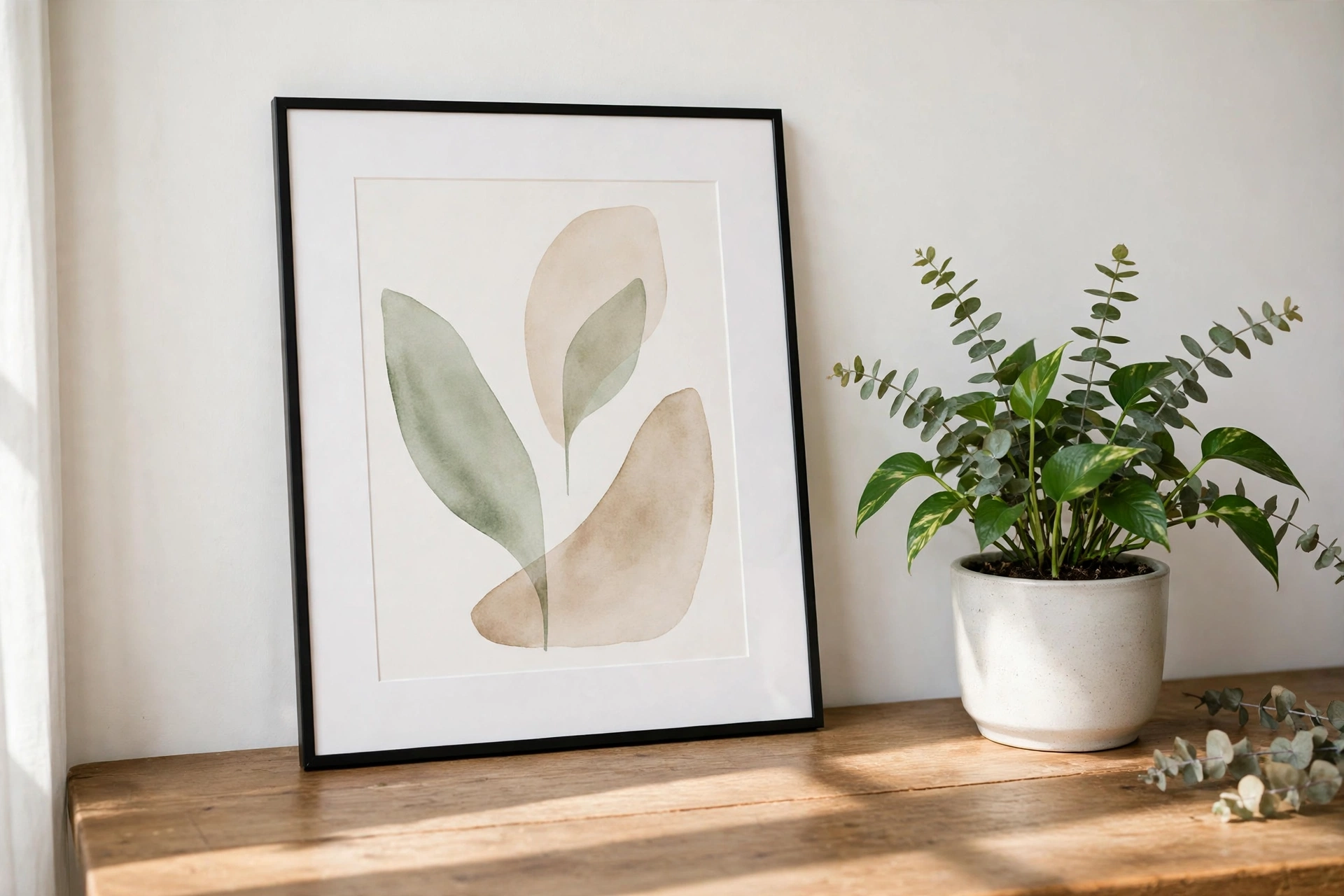
If frames are out of reach for now, the magnetic hanger is the next best thing: it frames the print with two clean rails, costs little, and hangs from one hook. Or lean a framed print on the desk or a dresser — leaning suits heavier frames, leaves the wall untouched, and looks intentional rather than unfinished.

Keep the frames consistent. One frame finish across the whole wall — all black, all oak, all the same thin profile — ties prints of different sizes together. Mixed frames can work in a salon-style wall, but only when something else repeats: the same mat colour, the same gap size, or the same print tone. If everything varies, the wall looks accidental.
FAQ
How many posters should I put on a wall?
Three to five prints suit a small wall. Start with one anchor print and two to four supporting prints that share a colour or a theme. Fifteen prints looks like a noticeboard, not a gallery.
How do I hang posters without damaging a rental wall?
Use removable adhesive strips or hooks rated above the frame’s weight on smooth, clean walls; magnetic poster hangers for big prints; clips and string for light prints; washi tape or putty for thin paper only. Test a hidden patch first, and pull strips straight down slowly when removing.
How far apart should poster frames be?
Keep the gaps even, around 5 to 8 cm between frames. Tighter reads as one unit; wider reads as separate pieces. Even gaps matter more than the exact number.
How high should I hang a poster wall?
Hang the centre of the whole group at about 145 to 150 cm from the floor — average eye level. Above furniture, leave 20 to 30 cm between the furniture and the bottom of the lowest frame.
How can I make cheap posters look expensive?
Frame them. A thin black frame with a white mat makes a cheap print look deliberate, and keeping one frame finish across the whole wall ties the collection together. A magnetic poster hanger is the cheapest good-looking alternative.