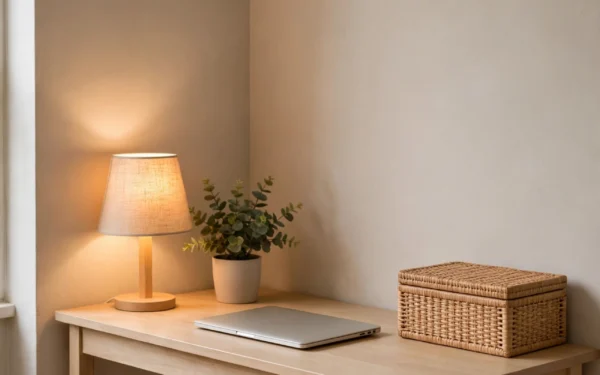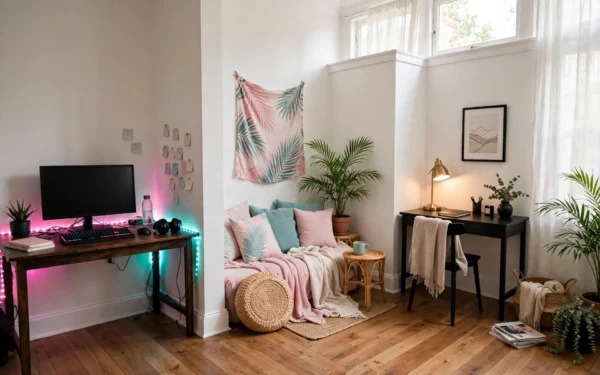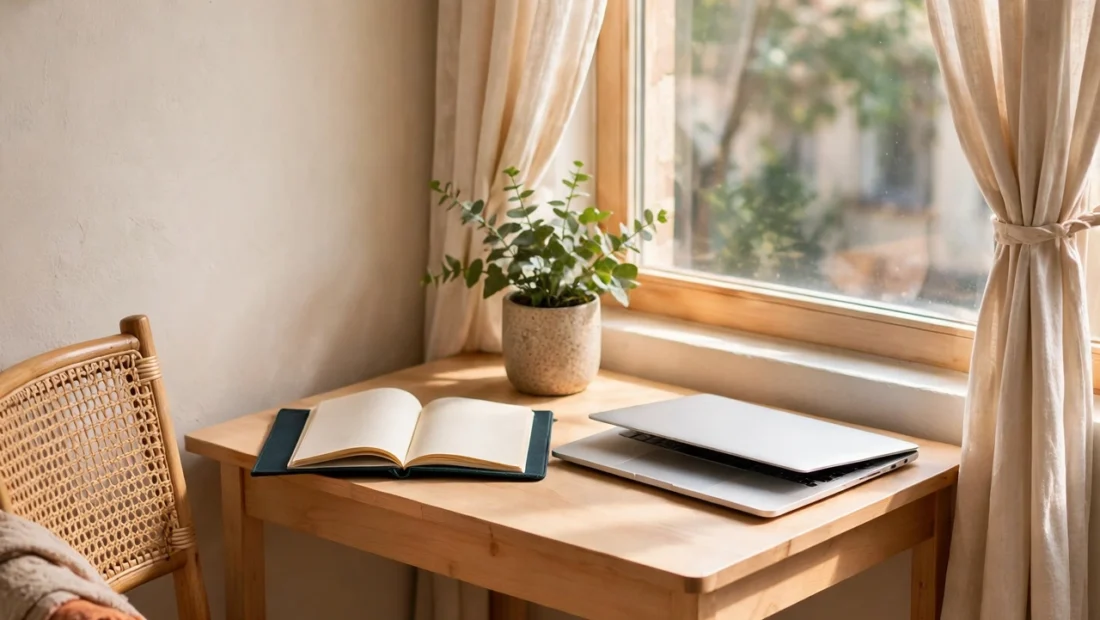
A small wood writing desk can do something a big office desk cannot: fit into a real apartment, warm up a corner, and still leave room to live in. Wood adds warmth that white plastic and metal often do not, which is why a small wooden desk is a popular choice for bedrooms, living rooms, and hallway corners. This guide helps you choose the right size, shape, and setup for a small space, and set it up in a renter-friendly way, without guessing at dimensions you do not have or buying a desk that blocks a door.
Table of Contents
[Hide]- How small is small enough?
- Shapes that work in small rooms
- Set up the desk for real work, not just photos
- Make a wood desk feel warm, not heavy
- Renter-friendly setup
- What to check before you buy or reuse one
- Wood types and finishes, in plain terms
- Desk placement: bedroom, living room, or hallway
- Pairing a wood desk with storage
- Working comfortably: chair, screen, and light
- Caring for wood in a rental
- Styling a wood desk without cluttering it
- FAQ
How small is small enough?
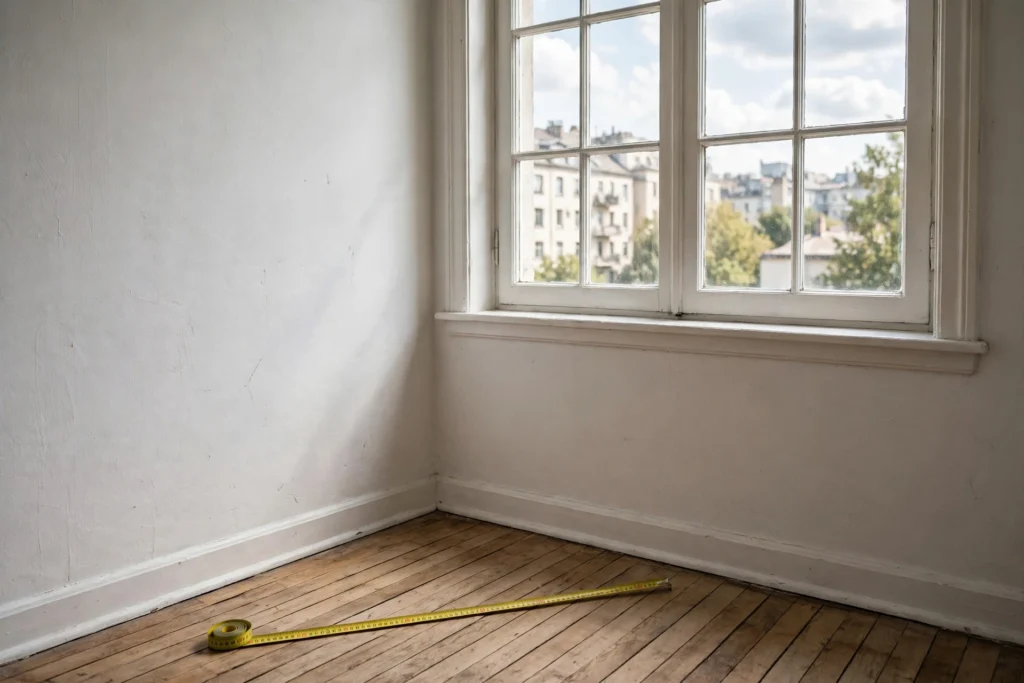
Measure first, in three places: the width of the wall or corner, the depth from the wall to where you will sit and push the chair back, and the height under any window sill or shelf above. Write those three numbers down before you look at desks at all.
A writing desk, as opposed to a full computer desk, is usually shallower and simpler: a top, legs, and at most one drawer. That simplicity is the point in a small room. If you need a lot of storage, add it beside the desk, not into it.
Shapes that work in small rooms
A rectangular desk against a wall is the safest choice. A corner desk uses dead corner space well, but check that you can sit comfortably and that the chair does not block a walkway. A fold-down or wall-mounted desk saves floor space, but only choose a mounted version if your lease allows it and the wall can hold it — otherwise choose a freestanding desk you can move.
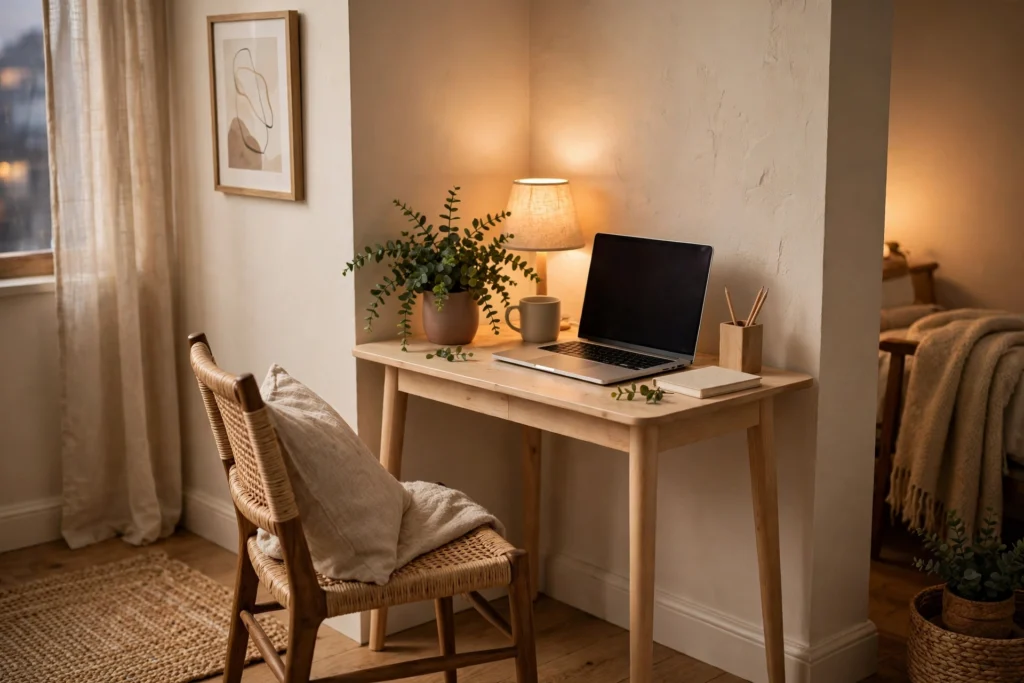
Light wood keeps a small room feeling open. Dark wood looks rich, but in a tiny, dim corner it can make the space feel smaller, so pair dark wood with good light if you choose it.
Set up the desk for real work, not just photos
Put the desk where you get side light from a window if you can. Keep the surface to daily items only: laptop or notebook, a pen, and water. Use one small tray for chargers, and keep papers in a single drawer or box beside the desk.
Your chair matters more than the desk’s style. Sit at the desk, feet flat, elbows comfortable, and screen at eye level with a stand or a stack of books if needed. If your back hurts after an hour, change the chair or the screen height before you change the desk.
Make a wood desk feel warm, not heavy
Wood already brings warmth, so you do not need much else. A small plant, one framed photo or print, and a warm lamp are enough. Avoid covering the whole top with decor — a writing desk needs empty space to write on.
If the desk looks cold, add textiles nearby instead of on it: a rug under the chair, a cushion on the chair, or a throw on a nearby bed or sofa. Those soften the corner without shrinking your work surface.
Renter-friendly setup
Choose a freestanding desk you can carry out at move-out. Avoid drilling for a mounted desk unless your lease clearly allows it. Protect floors with felt pads under the legs, and protect the top with a mat if you write with pens that could mark wood. Keep the desk away from radiators and direct damp, and wipe spills quickly. Wood lasts longer with simple care than with special products you may not need.
What to check before you buy or reuse one
Does it fit the measured width, depth, and chair space? Can you sit and work for an hour without strain? Is there a place for cables and one drawer or box nearby? Can you move it out without dismantling a room? Does it match the wood tones already in the room, or will it clash with them? If the answer to the first two is no, it is the wrong desk for that corner, however good it looks online.
Wood types and finishes, in plain terms
You do not need to know every timber species to choose well. What matters in a small room is tone and finish. Light woods, like pale oak or ash tones, keep a room feeling open. Mid-tones add warmth without darkening a corner. Dark woods look elegant, but they show dust more and can make a tiny room feel smaller unless the lighting is good. A matte or satin finish is more forgiving than high gloss in a working desk: it shows fewer fingerprints and scratches, and it does not glare under a lamp. If you are reusing an old desk, a clean, a light sand where appropriate, and a simple wax or oil finish recommended for that desk can refresh it, but do not strip or refinish a rented or borrowed desk without permission.
Desk placement: bedroom, living room, or hallway
In a bedroom, a desk in a corner near a window usually works best, with the bed behind you rather than in your line of sight while you work. That separation helps you switch off at night. In a living room, a desk against a wall, rather than facing the television, keeps distractions lower and makes video calls easier. A hallway desk only works if the hallway is wide enough for a chair and a walkway at the same time. If you have to move the chair every time someone passes, the spot will frustrate you. A narrow console-style desk can work in a wide hallway, but a full chair-and-desk setup usually needs a real corner.
Pairing a wood desk with storage
A small writing desk rarely has enough storage on its own, and that is fine. Pair it with one thing: a small drawer unit that fits under or beside the desk, a freestanding shelf, or a single box on a nearby shelf. The desk stays clear, and papers, chargers, and notebooks have a home within reach. Avoid adding storage on top of the desk itself. A tall organizer on a small desk shrinks the work surface and blocks light. Storage beside the desk, at the same height or lower, keeps the desk feeling open.
Working comfortably: chair, screen, and light
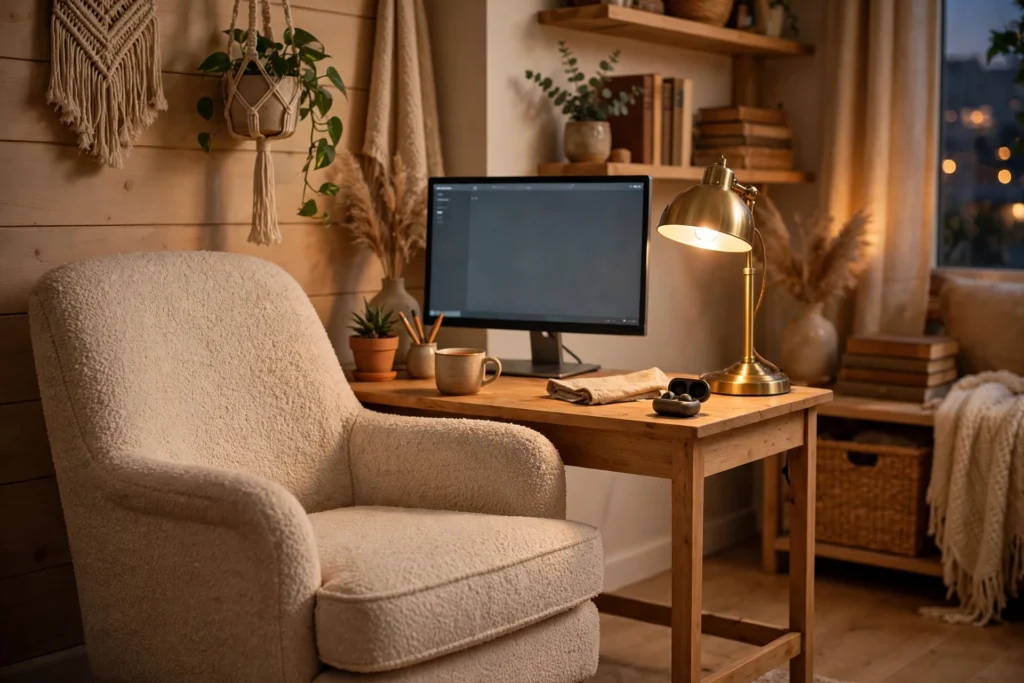
Sit with your feet flat on the floor, your back supported, and your elbows at a comfortable angle. If your feet do not reach the floor, a footrest or a low stool helps. If your screen is too low, raise it with a stand or a stable stack of books until the top of the screen is roughly at eye level. That one change prevents a lot of neck strain. Light should come from the side where possible, with a warm desk lamp for evenings. Avoid a single harsh overhead light as your only source, and avoid glare on the screen from a window directly behind you. Good light makes a small desk feel larger, because you can actually see your work without squinting.
Caring for wood in a rental
Wood desks in rentals face the same risks as any wood furniture: rings from mugs, scratches from keys, and sun fading near a window. Use coasters, a desk mat for writing, and felt pads under anything you slide across the top. Move the desk slightly away from a window if one side is fading, or rotate items on the surface so fading is even. For cleaning, a dry cloth for dust and a slightly damp cloth for marks is enough for most finishes. Avoid harsh cleaners and soaking the surface. If you are unsure about a cleaner, test it on an unseen corner first, and never use a product on a desk that is not yours without checking with its owner.
Styling a wood desk without cluttering it
Wood is already a feature, so styling should be light. A small plant, a framed print leaning against the wall, and a warm lamp are a complete look. If you like colour, add it with a cushion on the chair or a rug under the desk, not with more objects on the surface. Leave at least half the desk surface empty when you are not working. That empty space is what makes a small desk feel generous, and it is the space you will actually write or type in. A desk that is already full before you start work is not styled, it is crowded.
FAQ
Is a wood writing desk good for a laptop? Yes, for most laptop work. Add a stand or riser if the screen feels too low, and keep the surface clear so the laptop has room to breathe.
What size should a small writing desk be? There is no single right size — it depends on your wall and chair space. Measure your corner first, then choose a desk that leaves comfortable room to sit and move.
Can I use a wood desk in a bedroom? Yes, and it often works well as a bedroom corner desk. Use a lamp for evening work, and keep work items in one drawer or box so the bedroom still feels like a bedroom after work.
How do I keep a wood desk looking good? Wipe it with a dry or slightly damp cloth, use coasters and mats, and avoid standing hot or wet items directly on the wood.